



The asteroid belt is a fascinating region within our Solar System Home, and as a supplier deeply involved in the exploration and understanding of this cosmic neighborhood, I'm excited to share insights about its location and significance.
The Location of the Asteroid Belt
The asteroid belt is situated between the orbits of Mars and Jupiter. It forms a vast, doughnut - shaped region that encircles the Sun. This positioning is not a random occurrence; it is a result of the complex gravitational interactions during the early formation of the Solar System.
When the Solar System was taking shape about 4.6 billion years ago, the material that was in this region between Mars and Jupiter couldn't coalesce into a single large planet. Jupiter's massive gravitational pull was a dominant factor. Its strong gravity disrupted the accretion process, preventing the smaller rocky and metallic bodies from merging into a planet - sized object. Instead, these fragments remained as asteroids, creating the asteroid belt we know today.
The inner edge of the asteroid belt is approximately 2.2 astronomical units (AU) from the Sun, while the outer edge extends to about 3.2 AU. One astronomical unit is defined as the average distance between the Earth and the Sun, which is roughly 149.6 million kilometers. So, the asteroid belt spans a significant distance in our Solar System Home, providing a rich area for scientific study and potential resource exploration.
Composition and Characteristics of the Asteroid Belt
The asteroids in the belt vary greatly in size, composition, and shape. Some are as small as pebbles, while others, like Ceres, the largest object in the asteroid belt, are nearly 940 kilometers in diameter. Ceres is so large that it is classified as a dwarf planet.
In terms of composition, asteroids can be broadly divided into three main types: C - type (carbonaceous), S - type (silicaceous), and M - type (metallic). C - type asteroids are the most common, making up about 75% of the known asteroids in the belt. They are rich in carbon compounds and are thought to be some of the most primitive objects in the Solar System, containing valuable information about the early chemical composition of the protoplanetary disk.
S - type asteroids are made up of silicate materials and some metals. They are typically found in the inner and middle regions of the asteroid belt. M - type asteroids, on the other hand, are mainly composed of metallic iron and nickel. They are more commonly found in the middle and outer parts of the belt.


Importance of the Asteroid Belt
The asteroid belt holds great importance for both scientific research and potential future resource utilization. From a scientific perspective, asteroids are like time capsules that can provide insights into the early stages of the Solar System's formation. By studying their composition, scientists can learn about the processes that led to the creation of planets, the distribution of elements in the early protoplanetary disk, and the conditions that prevailed billions of years ago.
In addition to scientific value, asteroids also represent a potential source of valuable resources. Metals such as iron, nickel, and cobalt, as well as water ice, could be mined from asteroids in the future. This could be crucial for supporting long - term space exploration and the establishment of space colonies. For example, water ice can be used to produce drinking water, oxygen for breathing, and hydrogen for rocket fuel.
Our Role as a Solar System Home Supplier
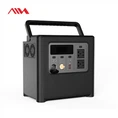
As a Solar System Home supplier, we understand the significance of the asteroid belt and its potential. We are committed to providing high - quality products and services that can support future exploration and utilization of this region. For instance, our energy storage solutions are designed to meet the unique demands of space - related applications.
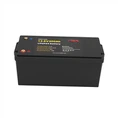
Our Stackable 51.2v 400ah Lifepo4 20KWh Battery is a powerful and reliable option for storing energy in space missions. It offers a high energy density, long cycle life, and excellent safety performance, making it suitable for use in spacecraft exploring the asteroid belt or in future mining operations.
The Stackable Household Lithium 51.2v 200ah is another product that can be adapted for space - based applications. Its stackable design allows for flexible energy storage configurations, which is essential for different mission requirements.
Our 20kWh Residential Energy Storage System can also be used in space habitats or bases on asteroids. It provides a stable and efficient energy storage solution, ensuring a continuous power supply for various operations.
Future Prospects and Challenges
The future of asteroid belt exploration and utilization is promising but also faces several challenges. One of the main challenges is the long - distance travel required to reach the asteroid belt. Spacecraft need to be designed to withstand the harsh space environment and have sufficient propulsion systems to cover the large distances.
Another challenge is the development of cost - effective mining and extraction technologies. Extracting resources from asteroids is a complex process that requires advanced equipment and techniques. Additionally, there are legal and ethical issues that need to be addressed, such as the ownership and management of asteroid resources.
Despite these challenges, the potential benefits are significant. The asteroid belt could be a key stepping - stone for humanity's expansion into the Solar System. It could provide the resources needed to build space infrastructure, support long - term space missions, and even enable the colonization of other planets or moons.
Conclusion
The asteroid belt, located between Mars and Jupiter in our Solar System Home, is a region of great scientific and economic potential. Its unique location and composition make it a valuable area for research and resource exploration. As a Solar System Home supplier, we are dedicated to providing the necessary products and services to support these endeavors.
If you are interested in our products and services for space - related applications or have any questions about the asteroid belt and its exploration, we encourage you to contact us for procurement and further discussions. We look forward to working with you to unlock the secrets of the asteroid belt and contribute to the future of space exploration.
References
- NASA. (2023). Asteroid Belt. Retrieved from [NASA official website].
- Planetary Science Institute. (2022). Composition and Origin of the Asteroid Belt. Tucson, AZ: Planetary Science Institute.
- Space.com. (2023). The Asteroid Belt: Facts About the Rocky Ring Between Mars and Jupiter. Retrieved from [Space.com official website].