



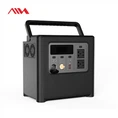


In the vast expanse of our Solar System Home, the concept of a "day" varies significantly from one planet to another. As a dedicated Solar System Home supplier, I've always been fascinated by the unique characteristics of each celestial body, especially those with extremely long days. This exploration not only enriches our understanding of the universe but also has implications for potential future space - based living and energy utilization.
Let's start with Venus, a planet that stands out for its incredibly long day. Venus rotates on its axis in a retrograde motion, which means it spins in the opposite direction compared to most planets in the Solar System. A single day on Venus, from one sunrise to the next, lasts about 243 Earth - days. This is longer than Venus' year, which is approximately 225 Earth - days. The slow rotation of Venus can be attributed to a combination of factors, including its thick atmosphere and past interactions with other celestial bodies. The thick atmosphere of Venus, composed mainly of carbon dioxide with clouds of sulfuric acid, creates a strong greenhouse effect. This atmosphere may have played a role in slowing down the planet's rotation over time through tidal interactions.
The long day on Venus has profound effects on its climate and surface conditions. With such a slow rotation, the temperature differences between the day and night sides are not as extreme as one might expect. The thick atmosphere redistributes heat around the planet, resulting in a relatively uniform surface temperature of about 462 °C (864 °F) across the globe. This high temperature is due to the greenhouse effect, which traps heat and makes Venus the hottest planet in the Solar System, despite being farther from the Sun than Mercury.
Another planet with a relatively long day is Mercury. Although not as extreme as Venus, a day on Mercury lasts about 176 Earth - days. Mercury has a unique rotation - orbit resonance, where it rotates three times on its axis for every two orbits around the Sun. This resonance is a result of the strong gravitational influence of the Sun on the planet. The close proximity of Mercury to the Sun means that the Sun's gravitational pull has a significant effect on its rotation. The tidal forces from the Sun have locked Mercury into this specific rotation - orbit pattern.
The long day on Mercury leads to extreme temperature variations. During the day, the surface temperature can reach up to 427 °C (801 °F), while at night, it can drop to as low as - 173 °C (- 280 °F). These extreme temperature differences are due to the lack of a significant atmosphere on Mercury to retain heat. The surface of Mercury is also heavily cratered, which is a result of its long history of impacts from asteroids and comets.
As a Solar System Home supplier, understanding the long days on these planets is crucial when considering future space - based projects. For example, if we were to establish a human settlement on Venus or Mercury, the long days would pose unique challenges and opportunities. The long days would require advanced energy storage solutions to ensure a continuous power supply. Our company offers a range of high - quality energy storage products that are suitable for such extreme environments.
For instance, our 51.2v 300ah Lifepo4 15KWh Solar ESS is designed to store large amounts of energy generated during the long days on these planets. This battery uses lithium iron phosphate (LiFePO4) technology, which is known for its high energy density, long cycle life, and safety. It can be stacked to increase the storage capacity, making it ideal for large - scale energy storage requirements.
Our Stackable Household Lithium 51.2v 200ah is another option for smaller - scale energy storage needs. This stackable battery is designed for residential use and can be easily integrated into a solar power system. It provides a reliable and efficient way to store energy during the long days and release it when needed.
In addition, our 20kWh Residential Energy Storage System is a comprehensive solution for long - term energy storage. This system is suitable for larger settlements and can be customized to meet specific energy requirements. It includes advanced battery management systems to ensure the safe and efficient operation of the batteries.
The long days on Venus and Mercury also present opportunities for solar power generation. With a long period of sunlight, solar panels could potentially generate a large amount of energy. However, the extreme temperatures and harsh environments on these planets would require solar panels to be specially designed to withstand these conditions. Our company is constantly researching and developing new solar panel technologies that can operate efficiently in extreme environments.
In conclusion, the planets with long days in our Solar System Home, such as Venus and Mercury, offer a wealth of scientific knowledge and potential for future space - based projects. The unique characteristics of these planets, including their slow rotation and extreme environmental conditions, pose challenges but also opportunities for innovation. As a Solar System Home supplier, we are committed to providing the best energy storage solutions to meet the needs of future space exploration and settlement.
If you are interested in our products or have any questions about energy storage for space - based projects, we encourage you to contact us for procurement and further discussions. Our team of experts is ready to assist you in finding the most suitable solutions for your specific requirements.
References


- NASA. (2023). Planetary Fact Sheet. Retrieved from [NASA official website]
- Planetary Science Institute. (2022). The Rotation of Venus. Retrieved from [Planetary Science Institute website]
- European Space Agency. (2021). Mercury: The Innermost Planet. Retrieved from [European Space Agency website]