



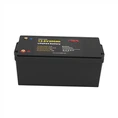
As a seasoned supplier of cylindrical cells, I've witnessed firsthand the critical role these powerhouses play in various industries, from consumer electronics to electric vehicles. One of the most pressing questions I often encounter from clients is how the cycle life of a cylindrical cell changes under different operating conditions. In this blog post, I'll delve into this topic, exploring the factors that influence cycle life and offering insights based on my years of experience in the field.
Understanding Cycle Life
Before we dive into the impact of operating conditions, let's first clarify what cycle life means. In simple terms, cycle life refers to the number of charge - discharge cycles a battery can undergo before its capacity drops to a predefined level, typically 80% of its initial capacity. A longer cycle life is highly desirable as it translates to a longer - lasting and more cost - effective battery solution.
Temperature
Temperature is one of the most significant factors affecting the cycle life of cylindrical cells. Extreme temperatures, both hot and cold, can have a detrimental impact on battery performance.
High Temperatures
When cylindrical cells operate at high temperatures, the chemical reactions within the battery accelerate. This increased reaction rate can lead to faster degradation of the electrode materials. For example, in lithium - ion cylindrical cells, high temperatures can cause the solid electrolyte interphase (SEI) layer on the anode to break down and reform continuously. This process consumes lithium ions and electrolyte, reducing the battery's capacity over time.


Moreover, high temperatures can also increase the internal resistance of the battery. As the internal resistance rises, more energy is dissipated as heat during charging and discharging, further accelerating the degradation process. For instance, if a High Rate 3.2v 3000mah Lifepo4 Cell is operated at temperatures above 60°C for an extended period, its cycle life can be significantly reduced compared to operation at room temperature.
Low Temperatures
On the other hand, low temperatures slow down the chemical reactions in the battery. This can result in a decrease in the battery's capacity and power output. At very low temperatures, lithium ions may not be able to move freely between the electrodes, leading to lithium plating on the anode. Lithium plating is a dangerous phenomenon that can cause short - circuits and reduce the cycle life of the battery. For example, a Cylindrical 3.6v 5000mah NCM Cell operating in sub - zero temperatures may experience a rapid decline in performance and cycle life.
Charge and Discharge Rates
The rate at which a cylindrical cell is charged and discharged also has a profound impact on its cycle life.
High Charge and Discharge Rates
When a battery is charged or discharged at a high rate, it experiences more stress. High - rate charging can cause lithium ions to move too quickly through the electrolyte and electrodes. This can lead to uneven lithium distribution within the battery, which may result in the formation of lithium dendrites. Lithium dendrites can penetrate the separator between the anode and cathode, causing short - circuits and reducing the cycle life of the battery.
For example, if a Cylindrical 3.2v 3300mah Lifepo4 Cell is charged at a rate much higher than its recommended rate, the stress on the battery can cause premature degradation. High - rate discharging can also generate a large amount of heat, which, as mentioned earlier, can accelerate the degradation process.
Low Charge and Discharge Rates
Conversely, charging and discharging at low rates are generally less stressful for the battery. The slow movement of lithium ions allows for a more uniform distribution within the battery, reducing the risk of lithium dendrite formation. This can help extend the cycle life of the battery. However, extremely low charge and discharge rates may not be practical in many applications due to the long charging times and limited power output.
State of Charge (SOC)
The state of charge of a cylindrical cell also affects its cycle life. Operating the battery at extreme states of charge, either fully charged or fully discharged, can be harmful.
High SOC
When a battery is kept at a high state of charge for an extended period, the positive electrode materials are under a lot of stress. This can cause the crystal structure of the electrode materials to change, leading to capacity loss. For example, in lithium - ion batteries, high SOC can cause the oxidation of the cathode materials, which can reduce the number of available lithium ions for cycling.
Low SOC
Operating a battery at a very low state of charge can also be detrimental. At low SOC, the SEI layer on the anode may become unstable, and the electrolyte may start to decompose. This can lead to an increase in internal resistance and a decrease in the battery's capacity.
Storage Conditions
Even when cylindrical cells are not in use, their storage conditions can impact their cycle life. Batteries should be stored at a moderate temperature and state of charge. Storing a battery at a high temperature and full charge can cause accelerated degradation. It is recommended to store cylindrical cells at around 50% state of charge and at room temperature to maximize their shelf life and subsequent cycle life when put into use.
Conclusion
In conclusion, the cycle life of cylindrical cells is influenced by a variety of operating conditions, including temperature, charge and discharge rates, state of charge, and storage conditions. As a supplier, I understand the importance of providing our customers with batteries that can withstand different operating environments. We have conducted extensive research and development to optimize the design and manufacturing processes of our cylindrical cells to ensure long cycle life under various conditions.
If you are in the market for high - quality cylindrical cells with excellent cycle life, we invite you to reach out to us for procurement discussions. We are committed to providing you with the best battery solutions tailored to your specific needs.
References
- Arora, P., & White, R. E. (1998). Comparison of Modeling Predictions with Experimental Data from Plastic Lithium - Ion Cells. Journal of the Electrochemical Society, 145(10), 3647 - 3669.
- Tarascon, J. M., & Armand, M. (2001). Issues and challenges facing rechargeable lithium batteries. Nature, 414(6861), 359 - 367.
- Zhang, S. S. (2006). A review on the separators of liquid electrolyte Li - ion batteries. Journal of Power Sources, 162(2), 1379 - 1394.