



As an AGV battery supplier, I understand the critical role that efficient charging plays in the performance and longevity of Automated Guided Vehicles (AGVs). Optimizing the charging process is not only about reducing downtime but also about extending the battery life and ensuring consistent operation. In this blog post, I'll share some key strategies and best practices to optimize the charging process of an AGV battery.
Understanding AGV Battery Types
Before delving into the optimization strategies, it's essential to understand the different types of batteries commonly used in AGVs. The most prevalent types are lead - acid batteries and lithium - ion batteries, specifically Lithium Iron Phosphate (LiFePO4) batteries.
Lead - acid batteries have been used for a long time due to their relatively low cost. However, they have several drawbacks, such as a shorter lifespan, lower energy density, and the need for regular maintenance. On the other hand, LiFePO4 batteries offer numerous advantages, including a longer cycle life, higher energy density, faster charging times, and better performance in a wide range of temperatures. For example, our Golf Cart EV Battery 24V 100Ah Rechargeable Deep Cycle Lithium Iron Phosphate LiFePO4 Batteries are designed to provide reliable power for various applications, including AGVs.
Charging Strategy Optimization
1. Charging Profile Selection
The charging profile is a set of parameters that determine how the battery is charged. Different battery chemistries require different charging profiles. For LiFePO4 batteries, a typical charging profile consists of three stages: constant - current (CC), constant - voltage (CV), and float charging.
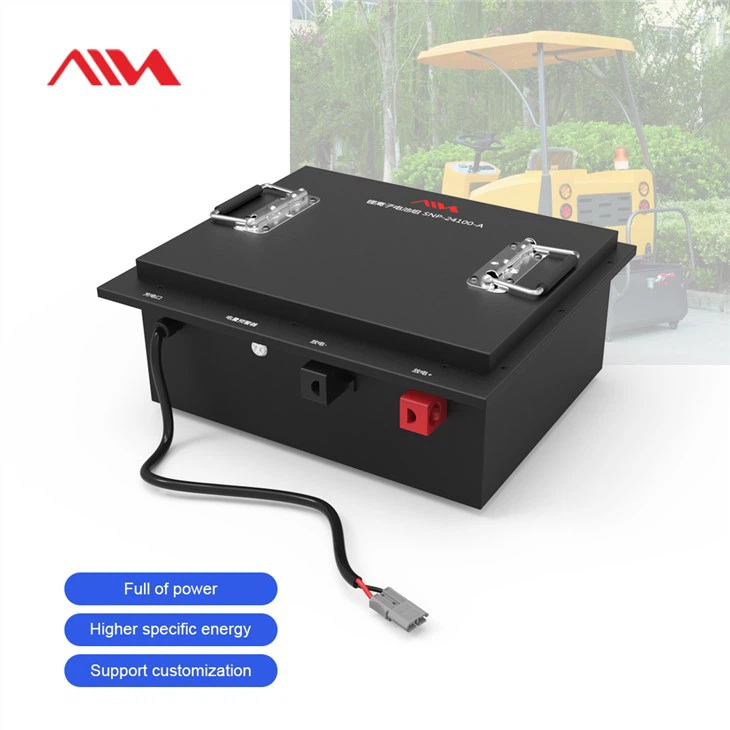

During the CC stage, a constant current is applied to the battery until it reaches a certain voltage. This stage allows for a fast initial charge. Once the battery reaches the set voltage, the charging switches to the CV stage, where the voltage is kept constant while the current gradually decreases. Finally, the float charging stage maintains the battery at a slightly lower voltage to keep it fully charged without overcharging.
It's crucial to select the appropriate charging profile for your AGV battery to ensure optimal charging and battery health. Using a charger with adjustable charging profiles can provide flexibility, especially if you have different types of batteries in your AGV fleet.
2. Charging Time Management
Managing the charging time is essential to minimize AGV downtime. One approach is to implement opportunity charging. Opportunity charging involves charging the AGV during short breaks in its operation, such as when it is waiting at a station or during a scheduled pause. This way, the AGV can accumulate charge over time without having to undergo a long, dedicated charging session.
Another strategy is to use a charging schedule based on the AGV's usage pattern. For example, if an AGV is used more intensively during certain hours of the day, you can schedule its charging during off - peak hours to avoid overloading the charging infrastructure.
3. Charging Infrastructure Design
The design of the charging infrastructure can significantly impact the charging process. It's important to ensure that the charging stations are easily accessible for the AGVs and that the charging connectors are compatible with the batteries.
In addition, the charging infrastructure should be able to handle the power requirements of the AGV batteries. For large AGV fleets, a centralized charging system with multiple charging stations may be necessary. This system can be managed and monitored to ensure efficient use of the charging resources.
Battery Monitoring and Maintenance
1. State of Charge (SOC) and State of Health (SOH) Monitoring
Monitoring the SOC and SOH of the AGV battery is crucial for optimizing the charging process. The SOC indicates the amount of charge remaining in the battery, while the SOH reflects the overall health and performance of the battery.
Using a battery management system (BMS), you can accurately measure the SOC and SOH of the battery. The BMS can also provide real - time information about the battery's temperature, voltage, and current, which can help detect any potential issues early. For example, if the temperature of the battery is too high during charging, it may indicate a problem with the charging process or the battery itself.
2. Regular Maintenance
Regular maintenance of the AGV battery is essential to ensure its long - term performance. This includes cleaning the battery terminals to prevent corrosion, checking the electrolyte level (for lead - acid batteries), and inspecting the battery for any physical damage.
For LiFePO4 batteries, although they require less maintenance compared to lead - acid batteries, it's still important to follow the manufacturer's recommendations. For instance, our Cleaning Equipment Battery Pack 24V 50ah comes with detailed maintenance instructions to ensure optimal performance.
Temperature Management
Temperature has a significant impact on the charging process and the lifespan of the AGV battery. High temperatures can accelerate battery degradation, while low temperatures can reduce the battery's capacity and charging efficiency.
To manage the temperature, you can use a thermal management system. A thermal management system can cool the battery during charging to prevent overheating or heat the battery in cold environments to improve its performance.
For example, some AGV batteries are equipped with built - in cooling fans or heating elements to maintain the battery temperature within the optimal range. Additionally, the charging infrastructure can be designed to provide proper ventilation to dissipate heat generated during charging.
Compatibility and Integration
1. Battery - Charger Compatibility
Ensuring compatibility between the battery and the charger is crucial for safe and efficient charging. Using an incompatible charger can lead to overcharging, undercharging, or even damage to the battery.
When selecting a charger for your AGV battery, make sure it is specifically designed for the battery chemistry and voltage. For example, our Customized LiFePO4 24V 50Ah 100Ah Floor Cleaning Machine Battery Operated Floor Sweeper Battery comes with a recommended charger to ensure optimal charging performance.
2. Integration with AGV Control System
Integrating the charging system with the AGV control system can provide better coordination and optimization. The AGV control system can communicate with the charging system to determine the best time to charge, based on the AGV's current task, SOC, and the availability of charging stations.
For example, the AGV control system can send a signal to the charging station when the AGV's SOC reaches a certain threshold, and the charging station can then prepare to start the charging process. This seamless integration can improve the overall efficiency of the AGV operation.
Conclusion
Optimizing the charging process of an AGV battery is a multi - faceted task that involves selecting the right battery type, implementing appropriate charging strategies, monitoring and maintaining the battery, managing the temperature, and ensuring compatibility and integration. By following these best practices, you can reduce AGV downtime, extend the battery life, and improve the overall performance of your AGV fleet.
If you're interested in learning more about our AGV batteries or have any questions regarding the charging process optimization, we'd be more than happy to assist you. Contact us to start a discussion about your specific requirements and explore how our high - quality AGV batteries can meet your needs.
References
- Battery University: A comprehensive resource for battery knowledge and best practices.
- Industry reports on AGV technology and battery management.