



Hey there! As a supplier of the Solar System Home, I often get asked all sorts of cool questions about our solar - related products and the solar system itself. One question that popped up recently was about the orbital period of the Moon around the Earth in the Solar System Home. Let's dig into this fascinating topic.
First off, the Moon is Earth's only natural satellite, and it's been orbiting our planet for billions of years. The orbital period of the Moon around the Earth isn't as straightforward as you might think. There are actually a couple of different ways to measure it.
The most commonly known orbital period is the sidereal month. This is the time it takes for the Moon to complete one full orbit around the Earth with respect to the fixed stars. It's about 27.3 days. Why is this measurement based on the stars? Well, the stars are so far away that they can be considered fixed reference points in the sky. When we track the Moon's position relative to these stars, we can accurately measure this fundamental orbital period.
But then there's the synodic month. This is the time from one new moon to the next new moon, and it's about 29.5 days. The difference between the sidereal and synodic months comes from the fact that the Earth is also moving around the Sun. As the Moon orbits the Earth, the Earth - Moon system is also making its way around the Sun. So, by the time the Moon has completed one sidereal orbit, the Earth has moved a bit in its orbit around the Sun. The Moon has to travel a little extra distance to get back to the same phase (like a new moon) relative to the Sun and the Earth.
Now, you might be wondering why this matters. Well, the synodic month has been really important for humans throughout history. It's the basis for many lunar calendars. Ancient civilizations used the phases of the Moon to mark time, plant crops, and even plan religious festivals. The cycle of the Moon's phases is something we can easily observe from Earth, and it has a big impact on our daily lives in many ways.


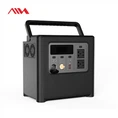
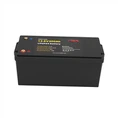
As a Solar System Home supplier, I'm always looking at how we can use the power of the solar system to our advantage. That's where our amazing solar energy storage solutions come in. We offer a range of high - quality batteries that can store the energy harnessed from the sun. For example, our 51.2v 300ah Lifepo4 15KWh Solar ESS is a great option for those who need a large - scale energy storage solution. It's designed to be reliable and efficient, so you can have access to solar - stored energy even when the sun isn't shining.
Another great product in our lineup is the LiFePO4 51.2V 100Ah 5Kwh Stackable Battery. This battery is stackable, which means you can combine multiple units to increase your storage capacity according to your needs. It's perfect for smaller homes or for those who want to start small with their solar energy storage setup.
And if you're looking for a more comprehensive solution for your home, our 20kWh Residential Energy Storage System is the way to go. It's designed to provide a stable and long - lasting energy supply for your entire household.
Back to the Moon's orbit. The gravitational interaction between the Earth and the Moon also has other effects. The Moon's gravity causes tides on Earth. As the Moon orbits, its gravitational pull causes the oceans to bulge. There are two high tides and two low tides each day in most places around the world. These tides have a huge impact on coastal ecosystems, fishing, and even shipping.
The Moon's orbit isn't a perfect circle either. It's an ellipse, which means the distance between the Earth and the Moon changes during its orbit. When the Moon is closest to the Earth (perigee), it's about 363,000 kilometers away, and when it's farthest (apogee), it's about 405,000 kilometers away. This variation in distance can also affect the strength of the tides. At perigee, the tides are a bit higher and lower than normal, and these are called spring tides (even though they happen all year round). When the Moon is at apogee, the tides are less extreme.
The study of the Moon's orbit has come a long way. Ancient astronomers used simple tools like the naked eye and basic measuring devices to observe the Moon's movements. Today, we have advanced telescopes, satellites, and computer models. These technologies allow us to study the Moon's orbit with incredible precision. We can predict lunar eclipses, which occur when the Earth comes between the Sun and the Moon, and solar eclipses, which happen when the Moon comes between the Sun and the Earth.
So, whether you're a space enthusiast or just someone interested in the natural world around you, understanding the orbital period of the Moon is really fascinating. And as a Solar System Home supplier, I see the beauty and power of the solar system every day through our products. Our solar energy storage solutions are a way to bring the power of the sun into your home in a practical and sustainable way.
If you're interested in learning more about our products or have any questions about the solar system, don't hesitate to reach out. We're here to help you make the most of the energy from the sun and the amazing celestial phenomena like the Moon's orbit. Whether you need a small battery for a home office or a large - scale energy storage system for a big house, we've got you covered. Let's start a conversation about how we can meet your energy needs and help you be a part of the sustainable energy future.
References
- "Astronomy: A Beginner's Guide to the Universe" by Eric Chaisson and Steve McMillan
- "The Cosmic Perspective" by Jeffrey O. Bennett, Megan O. Donahue, Nicholas Schneider, and Mark Voit